
The holidays should be about getting home for Christmas dinner, catching up with relatives, and making memories that last longer than the leftover turkey. But first, there’s the airport. Packed terminals, endless TSA lines, winter flight delays, and the occasional sprint to a connecting gate can drain the festive spirit from traveling. For wheelchair users, there’s the added concern of transferring between seats and trusting airline staff to handle essential mobility equipment safely.
While flying can be convenient for longer journeys, a wheelchair-accessible van removes some of the most frustrating parts of air travel. You keep full control over your schedule, comfort, and safety from your front door to your destination.
The Holiday Travel Dilemma: Flying vs. Driving with a Wheelchair
Flying makes sense when you’re crossing the country and only have a few days off. But for a family gathering several hours away, the time saved in the air travel can quickly disappear on the ground.
Think beyond the flight duration. There’s the journey to the airport, early arrival for assistance, security screening, boarding, and waiting for your wheelchair after landing. You still need accessible transportation from the airport to your final destination.
Peak-Season Crowds, Tight Connections, and Equipment Risks
Thanksgiving and Christmas travel put enormous pressure on airports. Crowded gates can complicate wheelchair maneuvering, while connections that look comfortable on paper may leave little time for assisted deplaning.
The bigger concern is often what happens to the wheelchair after it’s handed over for loading. Even a delayed chair can derail plans when it’s the only suitable mobility equipment available. Driving a lowered-floor conversion van eliminates terminal layovers completely, letting your family travel together in one continuous and predictable journey.
The Hidden Costs of Holiday Air Travel for Wheelchair Users
Beyond standard holiday travel delays, commercial air travel imposes distinct physical and logistical burdens on passengers with mobility devices.
Fear of Wheelchair Damage in Commercial Cargo Holds
Because commercial aircraft cabins lack wheelchair securement spaces, travelers must gate-check their primary mobility devices.
According to the U.S. Department of Transportation data reported by Wheelchair Travel, U.S. airlines still mishandle more than 11,000 wheelchairs and scooters every year. It could be a bent wheel, a damaged joystick, or a broken seating component that leaves a traveler stranded without independent mobility at their holiday destination.
Experienced wheelchair travelers often remove detachable components, photograph their equipment, and provide written handling instructions before flying. Those precautions can help, but they can’t eliminate the risks once the chair leaves their sight.
The Physical Strain and Discomfort of Aisle Chair Transfers
Boarding a commercial airliner requires transferring from your custom-fitted wheelchair into a narrow aisle chair, then transferring again into the airplane seat. And after landing? The process starts all over.
Multiple manual transfers increase the risk of bruising, skin breakdown, and joint strain. Sitting for hours on a standard airplane cushion rather than a custom pressure-relieving seating system also causes severe discomfort and fatigue before your holiday even begins.
Flight Delays, Missed Connections, and Terminal Fatigue
A 45-minute connection might look reasonable when booking. But if assisted deplaning takes longer than expected and the next gate is across the terminal, the schedule becomes much less forgiving.
There are also long stretches of waiting in a chair that may not provide the same positioning or comfort as your own. Accessible restrooms can be far from the gate, and meal options may require another trip through a crowded concourse.
A missed connection can mean rearranging assistance and finding accessible transportation or overnight accommodation at short notice, which ultimately drains your energy before the holiday begins.
For shorter trips, these complications make driving worth considering, even when the estimated road time looks longer than the flight.
Like what you’re reading? Subscribe to our newsletter and get new updates directly to your inbox.
Why Renting a Wheelchair-Accessible Van is the Ultimate Holiday Alternative
A road trip certainly has its own challenges, including traffic and unexpected detours. However, a suitable accessible rental puts several important decisions back in your hands.
Stay Safe and Comfortable in Your Own Customized Chair
For many wheelchair users, the biggest advantage of driving is remaining in their personal wheelchair during the journey.
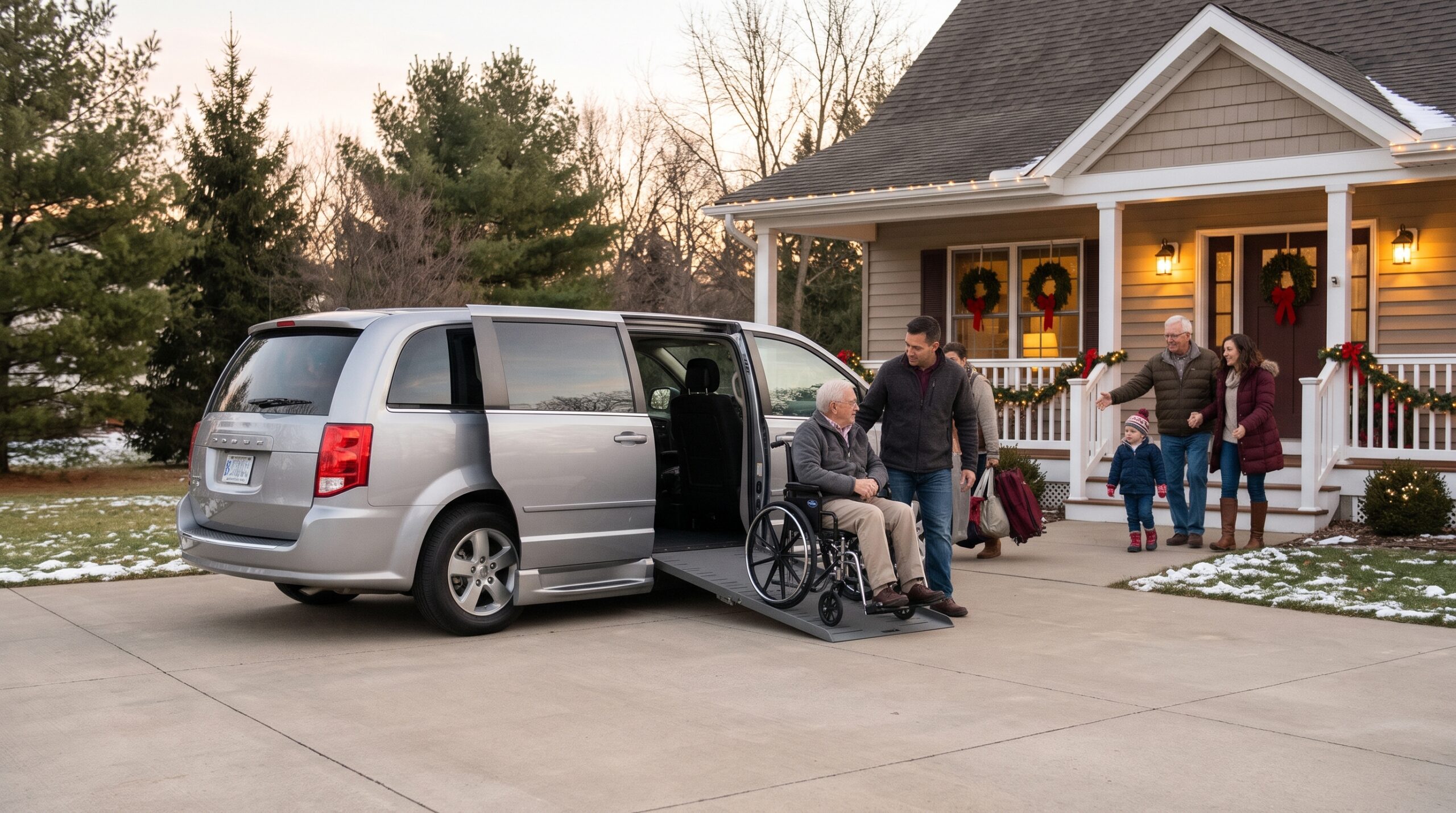
In a lowered-floor conversion minivan, you roll directly up an automatic or manual ramp into the spacious cabin and remain seated in your wheelchair throughout the drive. Heavy-duty floor tracks and four-point retractable tie-down systems secure your chair firmly in place, while standard lap and shoulder belts keep you safe on the highway.
When considering a wheelchair van rental for holidays, check the vehicle’s actual dimensions rather than assuming that every accessible van will fit. Confirm the ramp’s usable width, entry height, interior headroom, and wheelchair position. Ask the rental provider to demonstrate the securement system before departure.
Complete Control Over Your Schedule and Rest Stops
Airline schedules dictate when you eat, rest, and use the restroom. When you book a wheelchair van for holidays, you can leave after a proper breakfast, make an unplanned stop to admire a neighborhood’s over-the-top Christmas decorations, and even take breaks whenever needed without worrying about missing a boarding call.
Of course, spontaneous stops work better when you’ve done a little planning. Map out accessible restrooms along your route, particularly at interstate welcome centers and larger rest stops.
A useful trick is to identify two accessible stops for every long stretch of highway. If one is closed or its accessible restroom is out of service, you already have a backup. During winter, consider driving in daylight, particularly in areas where snowbanks may block accessible parking spaces or curb cuts.
Generous Space for Luggage, Gifts, and Medical Supplies
Holiday packing starts with a suitcase or two. Then come the Christmas presents, Grandma’s famous casserole, extra winter coats, and that suspiciously oversized gift someone insists is a surprise. Before you know it, you’re packing for a family reunion rather than a weekend getaway. Airlines enforce strict baggage limits and charge extra for oversized items.
With a wheelchair-accessible rental van, you have more freedom to bring what you need. Depending on the vehicle’s layout, you can pack multiple suitcases, wrapped gifts, wheelchair maintenance supplies, portable shower chairs, backup chargers, and essential medical equipment without worrying about weight limits or distributing everything among checked bags.
Just remember that accessible vans aren’t bottomless Christmas stockings. Lowered floors and wheelchair seating positions affect available cargo space, so confirm the layout before booking. Keep the ramp area clear, secure loose bags, and make sure nothing interferes with the wheelchair restraints.
Essential Checklist for Planning an Accessible Holiday Road Trip
When planning a holiday road trip, settle these details before anyone starts arguing about snacks or the road-trip playlist.
- Reserve your vehicle 60 to 90 days early: Holiday demand can restrict vehicle choices. Secure your Reservation well ahead of Thanksgiving or the December holidays to get the exact ramp entry style and interior dimensions you need.
- Confirm vehicle and chair measurements: Verify your wheelchair’s total width, seated passenger height, and combined weight so mobility specialists can match you with the right lowered-floor layout.
- Check parking at your destination: A relative’s narrow driveway or a hotel parking garage may not provide enough ramp clearance. Ask for usable measurements rather than relying on an accessible parking symbol.
- Calculate your mileage: Wheelchair Getaways currently includes at least 100 miles per rental day, with additional charges or alternative mileage programs depending on location. Factor in sightseeing and detours.
- Map out accessible rest stops: Check restroom layouts and opening hours, especially when traveling on Christmas Eve or Christmas Day.
- Pack a wheelchair essentials kit: Include the charger, a portable tire inflator, basic adjustment tools, microfiber wheel wipes, emergency contact information, and any removable parts you may need during the trip.
- Stage Cabin Comforts: Pack warm fleece lap blankets, hydration bottles, and healthy road snacks in the center console so passengers stay cozy and energized between stops.
Enjoy Stress-Free Holiday Road Trips with Wheelchair Getaways
Finding a dependable vehicle near you used to require a considerable amount of calling around. Wheelchair Getaways makes the search easier through our nationwide network of more than 200 rental locations across the United States.
We offer accessible vehicles with features such as lowered floors, side-entry or rear-entry ramps, wheelchair securement systems, and adaptable seating arrangements. Every vehicle undergoes a rigorous multi-point safety inspection prior to pickup, ensuring total peace of mind on winter highways.
Certain partner locations also offer promotional discounts, so it’s worth checking the seasonal discounts before confirming your dates. Call us at 855-419-4335 to inquire about available models or fill out the online rental form to request a quote.
Frequently Asked Questions About Accessible Holiday Travel
Is driving a wheelchair van better than flying for holiday trips?
It depends on the distance and the traveler’s individual needs. For trips within a one- to two-day driving radius, renting an accessible van eliminates the risk of airline wheelchair damage, avoids exhausting aisle-chair transfers, and gives families complete control over rest stops and luggage. For longer distances, flying may still be preferable, particularly when accessible ground transportation is arranged at both ends.
Can I stay in my wheelchair while riding in an accessible rental van?
Yes. Lowered-floor conversion vans feature certified four-point tie-down tracks and occupant restraint belts that allow wheelchair users to ride safely and comfortably in their own chair.
Should I choose a side-entry or rear-entry wheelchair van for holiday visits?
Side-entry vans let the wheelchair user ride in the front passenger seat or middle row and deploy ramps onto sidewalks or wide driveways. Rear-entry vans deploy out the back hatch, making them ideal for narrow residential driveways or tight parking lots where side clearance is limited.
How far in advance should I book a wheelchair van for Thanksgiving or Christmas?
Booking 60 to 90 days ahead gives you more opportunity to secure the right configuration, especially during busy holiday periods. Availability varies considerably by location, so check as soon as your travel dates are known.
Is a wheelchair van rental cheaper than flying?
It can be, particularly when several people are traveling together. Compare the total rental cost, fuel, additional mileage, and accommodation against airline tickets, baggage fees, airport parking, and accessible transfers. Driving isn’t automatically less expensive, especially for long-distance or one-way journeys, but the convenience often outweighs the stress of accessible airport travel.