Every Texan knows the noise a person makes when they first hit 68-degree spring water in August. It’s half gasp, half formal complaint, and it carries across a whole swimming hole.
The good news is that you don’t have to scramble down a limestone ledge or steep riverbank to experience that yourself. A handful of Texas springs have ramps, lifts, or water wheelchairs, and several state parks have paved drives, accessible cabins, and all-terrain chairs for outdoor adventures.
In this guide, we’ll take a more practical look at wheelchair-accessible Texas state parks and spring-fed swimming spots, from where the ramp really is to which “easy trail” turns into stone steps halfway down.
Top Accessible Swimming Holes & Spring-Fed Waters
Texas swimming holes are legendary for providing refreshing relief during warm summer months. While many wild creek beds remain rugged, several of the state’s most famous spring-fed waters feature world-class accessibility infrastructure.
Barton Springs Pool (Austin, TX)
Located in the heart of Zilker Park, Barton Springs Pool is a three-acre, spring-fed pool where the water remains approximately 68°F to 70°F throughout the year, which feels fantastic in August and rather ambitious on a chilly morning.
The setting is part of the fun. You get broad lawns, old shade trees, limestone edges, and swimmers doing lazy laps. Paved concrete paths run from designated van-accessible parking toward the pool, and a wide concrete entry ramp with sturdy handrails leads into the shallow end.
Take it slowly, because the ramps get slick with spring water and dripping swimmers. The facility also provides specialized water wheelchairs upon request, allowing seamless transfers for swimmer comfort.
One thing to plan around is the schedule. Barton Springs gets busy, especially in warm weather, and Thursday afternoons are a bad bet because the pool closes for its weekly cleaning period. Aim for another day, preferably earlier in the morning, when the water is calm, and the paths are less crowded.
San Solomon Springs at Balmorhea State Park (Toyahvale, TX)
Situated in West Texas near the Davis Mountains, Balmorhea State Park houses the world’s largest spring-fed swimming pool, covering over three-quarters of an acre. More than 15 million gallons of clear water flow through the pool daily, keeping the temperature stable between 72°F and 76°F year-round.
Balmorhea features extensive ADA improvements, including wide paved decking surrounding the entire pool perimeter, zero-depth concrete entry ramps, and roll-in shower facilities at the historic bathhouse. The flat layout makes it easy to get close to the water and watch fish dart through the crystal-clear spring below, even if you’re not planning to swim.
The important part is getting through the gate in the first place. Daily visitation is capped at 650 people, and once the park reaches capacity, staff can turn away walk-ins. Reserve your day pass before making the long drive to Toyahvale, especially during summer.
Krause Springs (Spicewood, TX)
Located 30 miles west of Austin, Krause Springs is a historic twin-spring swimming site listing 32 natural springs on property. While the lower natural swimming hole has steep granite steps, the man-made pool, gardens, and grills are near the entrance. You can see the cypress-shaded grotto from above, then swim in the upper spring-fed pool.
Among accessible swimming holes Hill Country visitors frequently consider, this one requires especially careful expectation-setting. Call before visiting and ask staff to describe the current route from parking to the upper pool, including surface conditions and any slope changes.
Wheelchair-Accessible Texas State Parks
Beyond swimming holes, Texas boasts over 80 state parks offering diverse ecosystems. Several flagship parks feature dedicated paved trails, accessible fishing piers, and scenic overlooks designed for vehicle-based and roll-in exploration.
Garner State Park (Concan, TX)
Spanning 1,774 acres, Garner State Park is famous for its turquoise water along the Frio River. For wheelchair users, some of the easiest stops are around the park’s main facilities.
The Pavilion Gift Shop, park store, and visitor center all have accessible parking, while paved riverfront routes let you stay close to the water without picking your way across loose rocks. The Shady Meadows restrooms and showers include larger stalls with handrails and a bench, which already puts them well ahead of the average campground bathhouse.
Garner also has one tradition you do not really expect from a state park. On summer evenings, the jukebox comes on at the pavilion, and people gather for the park’s famous nightly dance party, a tradition that dates back to the 1940s. If you want to stay overnight, Cabin 18 offers accessible lodging. Book early because summer dates go fast.
Palo Duro Canyon State Park (Canyon, TX)
As the second-largest canyon in the United States, Palo Duro Canyon offers breathtaking red rock scenery. The main way to explore the canyon is via a 16-mile paved scenic drive that descends 800 feet to the canyon floor.
Along the way, you can stop at overlooks and spot landmarks such as the CCC Overlook, El Coronado Lodge, and Big Cave without committing to a hiking trail. If you want to leave the pavement behind, Palo Duro has an all-terrain wheelchair you can reserve for visits.
Not every trail or overlook is step-free, though, so ask park staff which routes and pullouts work best with your vehicle and mobility setup before heading down.
Pedernales Falls State Park (Johnson City, TX)
Pedernales Falls is about an hour west of Austin, and its signature view is the river tumbling over huge tilted slabs of limestone. A maintained path winds through shady oak woodland toward an elevated wooden observation deck, so you get the classic view without needing to scramble over rock.
But one of the park’s most accessible experiences is actually nowhere near the falls. A roughly 100-foot asphalt path leads to the bird blind, which has a 35-foot glass viewing wall overlooking year-round bird feeders. Settle in for a few minutes, and you may spot cardinals, finches, woodpeckers, and hummingbirds behaving like tiny territorial landlords.
An all-terrain wheelchair is also available for reservation, and the restrooms at headquarters and the picnic area are all wheelchair accessible.
Like what you’re reading? Subscribe to our newsletter and get new updates directly to your inbox.
Vehicle Staging & Texas Heat Logistics
An accessible van is part transportation and part mobile base camp. In Texas, that second job matters.
Managing Asphalt Heat & Parking Crosshatches
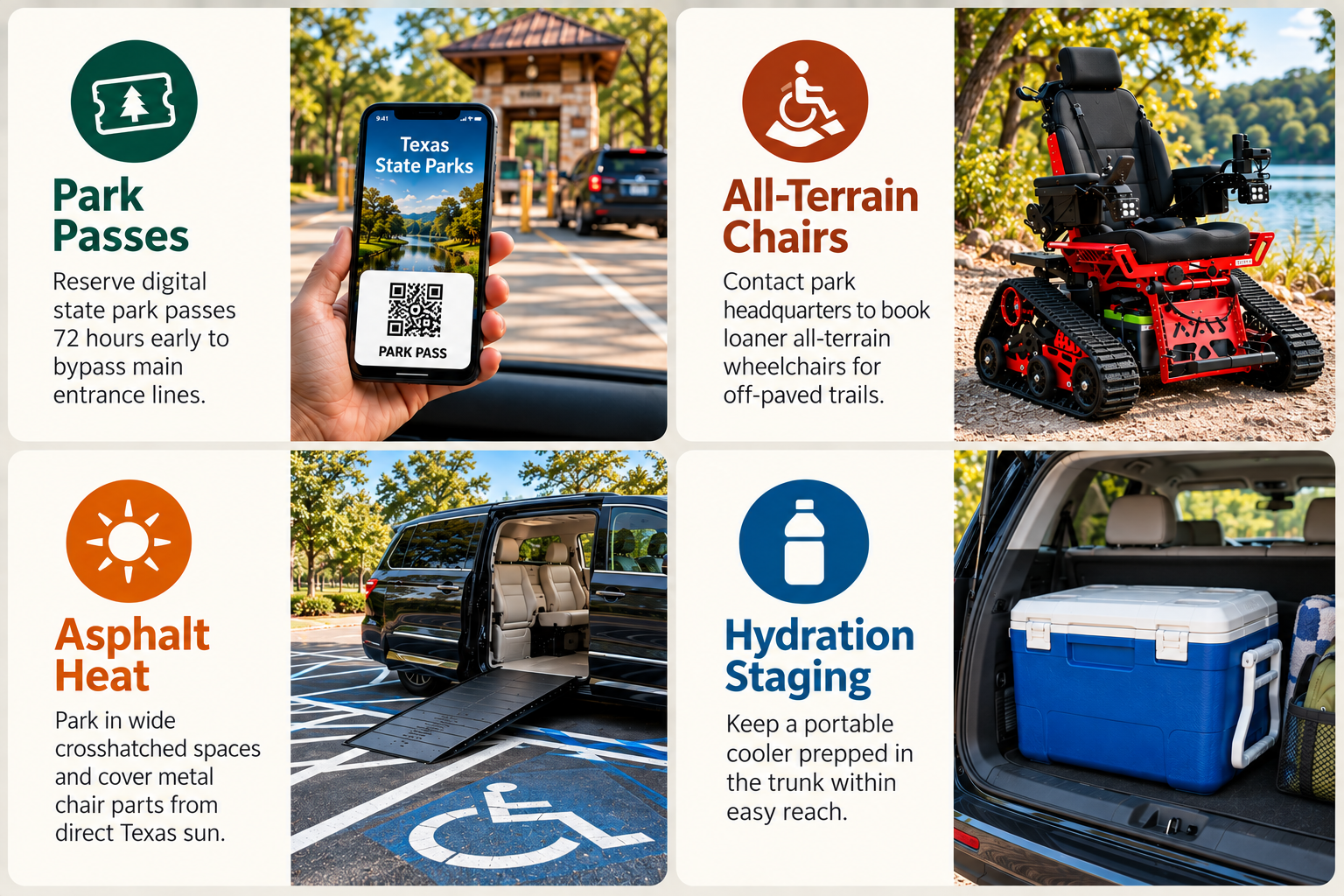
Texas summer ambient temperatures regularly exceed 95°F, which means dark asphalt parking lots can quickly surge past 135°F.
At state parks and swimming holes, look for van-accessible spaces with wide crosshatched access aisles rather than simply grabbing the closest open spot. Those striped areas give a side-entry or rear-entry ramp enough room to deploy onto a firm surface without ending in landscaping, loose gravel, or somebody else’s bumper.
If you have to cross a large exposed lot, a light-colored umbrella or sunshade can also help keep direct sun off the chair. Metal parts that have been sitting outside can get uncomfortably hot, so do a quick touch-check of armrests, buckles, footplates, and seating surfaces before settling back in.
Vehicle Secondary Climate Control
A van that cools only the front seats may leave rear passengers uncomfortable.
If you are arranging an adaptive vehicle rental trip in Texas through Wheelchair Getaways, ask about vehicles with rear climate control and confirm the available configuration before booking. Pre-cooling the cabin before loading can make a big difference, especially when the ramp and interior have been sitting in direct sun.
Schedule outdoor stops early in the morning, then save air-conditioned visitor centers and scenic drives for the hottest part of the afternoon.
Texas Outdoor Travel Readiness Checklist
Review this pre-trip operational grid before heading out on your Texas adventure:
- Texas State Park Pass: Purchase a digital park pass online 72 hours early to skip gate entry lines and secure reserved parking.
- Water Equipment Prep: Pack non-slip water shoes, breathable lap covers, and quick-dry towels for spring-side transfers.
- All-Terrain Chair Reservations: Contact individual state park headquarters 48 hours in advance to reserve loaner all-terrain wheelchairs.
- Hydration Staging: Pack a portable cooler with plenty of water and electrolytes, staging it in the mid-cabin floor space within arm’s reach.
- Paved Route Mapping: Verify paved trail maps on the official TPWD portal before departing to confirm smooth footpath connectivity.
Hit the Texas Trail with Total Confidence
From the icy spring waters of Barton Springs to the majestic red rock vistas of Palo Duro Canyon, modern accessibility features make it easier than ever to experience the state’s most iconic outdoor wonders without barriers.
Wheelchair Getaways rents wheelchair-accessible vans across Texas, with rear- and side-entry models, lowered floors, power ramps, and tie-down systems for a comfortable road trip. Vehicle features vary, so share your wheelchair dimensions, passenger count, and luggage needs when requesting a quote.
Ask about current deals and discounts, particularly for longer bookings. Fill out the reservation form or contact (855) 419-4335 to check availability. Once the van is sorted, the only remaining Texas road-trip debate is who controls the playlist.