
Holiday trips always sound festive until you’re juggling overstuffed luggage, rationing snacks, arguing with the GPS, and assisting that one family member who needs a bathroom break every ten minutes.
When traveling with a wheelchair user, you also have to factor in mobility equipment, medical supplies, and all the little add-ons that ensure a smooth trip. Thankfully, a well-prepared, accessible van packing checklist can avoid unpleasant surprises, roadside meltdowns, and other emergencies.
But how do you separate true essentials from “just in case” extras that only eat up cabin space? This guide covers everything from pre-trip planning and gear placement to comfort hacks and what to do if the van decides to act up on the interstate.
Pre-Trip Planning That Saves You Headaches Later
Spontaneous trips are exciting, but can cause a lot of stress. To avoid that, you must do some planning before hitting the highway. This includes:
Choose the Right Travel Window
Timing can make or break a road trip. Holiday weekends and late afternoons often come with traffic surges that can turn a two-hour drive into a six-hour test of patience.
If possible, aim for early morning departures. During the 6–8 a.m. window, there are fewer cars on the road, so you can cruise without constant stop-and-go traffic, hit rest stops before the crowds, and secure the best wheelchair-accessible parking spots.
Loading an accessible van is another timing factor most families underestimate. A standard family SUV might take five minutes to pack. However, an accessible van with a ramp and mobility gear can easily take 10–20 minutes longer per stop. Factor in short breaks every 2–3 hours for stretching, repositioning, and avoiding pressure sores — plus some buffer for bathroom trips
Verify Accessibility at Your Destination
“Wheelchair accessible” signs can be deceiving. Call ahead and get real measurements: doorway widths (32–36 inches), ramp angles if applicable, bathroom layout, and turning radius. Hotels often get bed height wrong, so ask for specifics. Similarly, check the layout of restaurants, museums, theaters, and parks for narrow aisles, steps, or uneven pathways. Even gas stations and rest stops are worth a quick peek if you’re planning longer drives.
Bonus tip: Always request photos if something seems off.
Map Your Route
Mountain getaway? Cross-country trek? Always start with road conditions. During winter, black ice can form on bridges and shaded stretches, leading to skidding and accidents. Similarly, potholes and uneven pavement can jostle wheelchairs or cause tie-downs to shift during sharp turns.
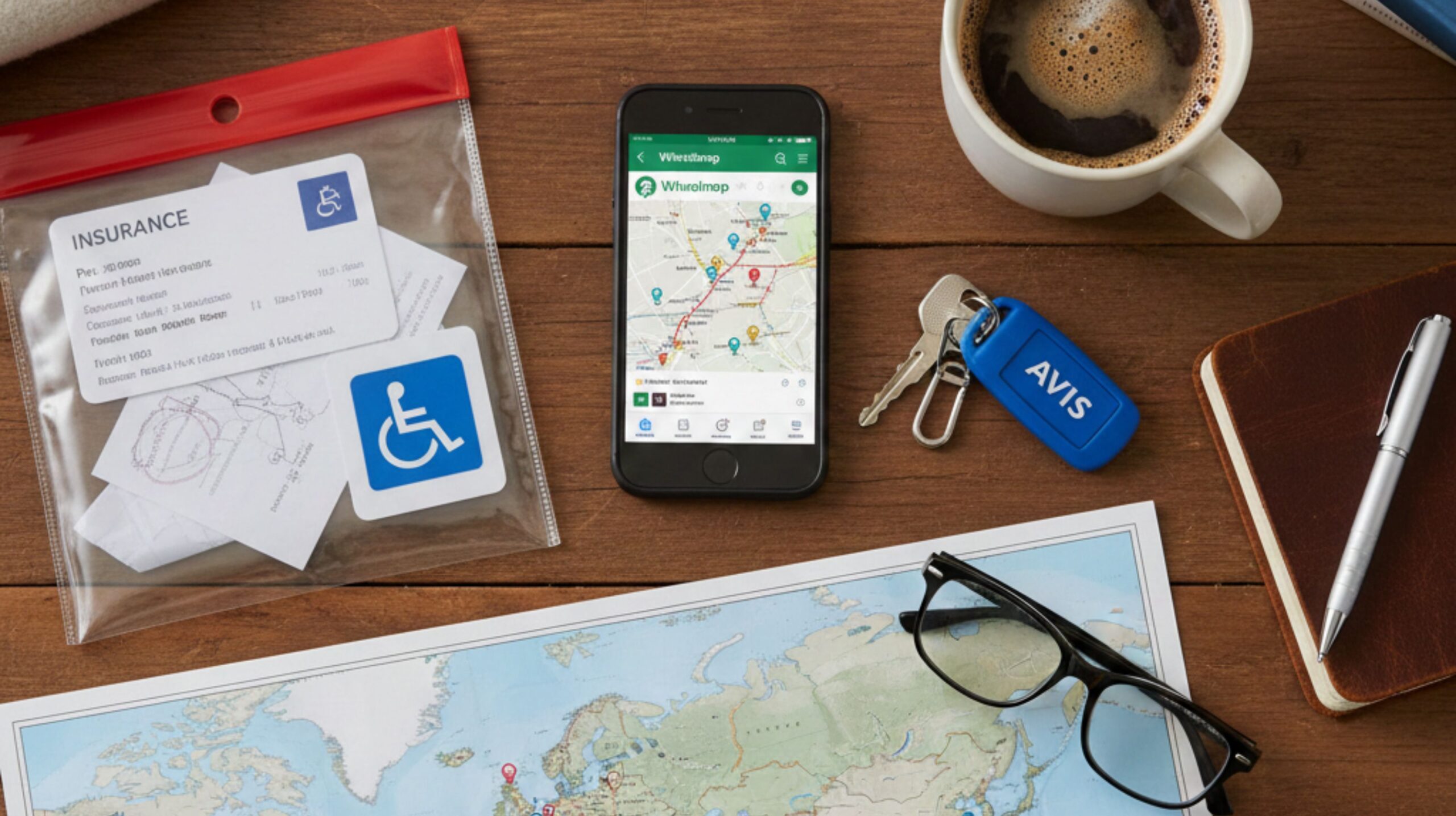
Don’t rely solely on local news. Instead, use apps like AccessNow, Wheelmap, or Google Maps Accessibility to locate alternate routes. Pay attention to inclines, curbs, and tight turns, especially if your wheelchair-accessible van has lower ground clearance of 5–6 inches or a long wheelbase.
Gather Your Essential Documents
Prepare a waterproof folder or pouch with all essential documents, including:
- IDs
- Insurance
- Van rental agreements
- Roadside assistance info
- Disability placards
- Mobility equipment manuals
- Camping or State/National Park passes
- Passports if you’re traveling across country lines
Include prescriptions and physician notes in case you’re questioned about equipment or supplies. Don’t forget to create digital copies in case something gets misplaced.
Wheelchair Accessible Van Packing Checklist
Most modified vehicles feature tie-down points, ramps, and extra cabin space for mobility equipment. However, you must pack the following essentials for a stress-free holiday trip:
Mobility Equipment
- Manual or power wheelchair, scooter, walker, or other mobility aid with protective covers.
- Wheelchair tie-down straps, ramps, and transfer boards for safe loading and travel.
- Most power chairs run 10–25 miles per charge, depending on the model. Pack extra batteries and chargers to cover long drives or unexpected delays.
- Joystick covers, charger fuses, gloves for ramp handling, and a small multitool for on-the-go fixes.
Medical Supplies
- Daily medications plus at least seven extra days’ supply in case of travel delays.
- Doctor’s letters or prescriptions for oxygen tanks, CPAP machines, catheters, injections, or liquid medications if needed during transit.
- First aid kit, antiseptics, disposable gloves, thermometer, blood pressure monitor, and sanitation supplies.
Personal Care and Hygiene Essentials
- Toiletry kits, no-rinse cleaning wipes, female hygiene products, hand sanitizer, and disposable gloves.
- Portable urinal, foldable commode, catheter kits, absorbent pads, and disposal bags to handle restroom limitations.
Comfort and Entertainment Items
- Pressure-relieving wheelchair cushions, neck pillows, lumbar support, and footrests.
- Blankets, heated seat covers, or cooling towels, depending on the climate.
- Earplugs or noise-canceling headphones when traveling with a chatty friend.
- Movies, audiobooks, card games, and offline entertainment to avoid boredom
- Mounts or holders for devices to prevent them from sliding under seats.
Like what you’re reading? Subscribe to our newsletter and get new updates directly to your inbox.
How To Organize Your Accessible Van
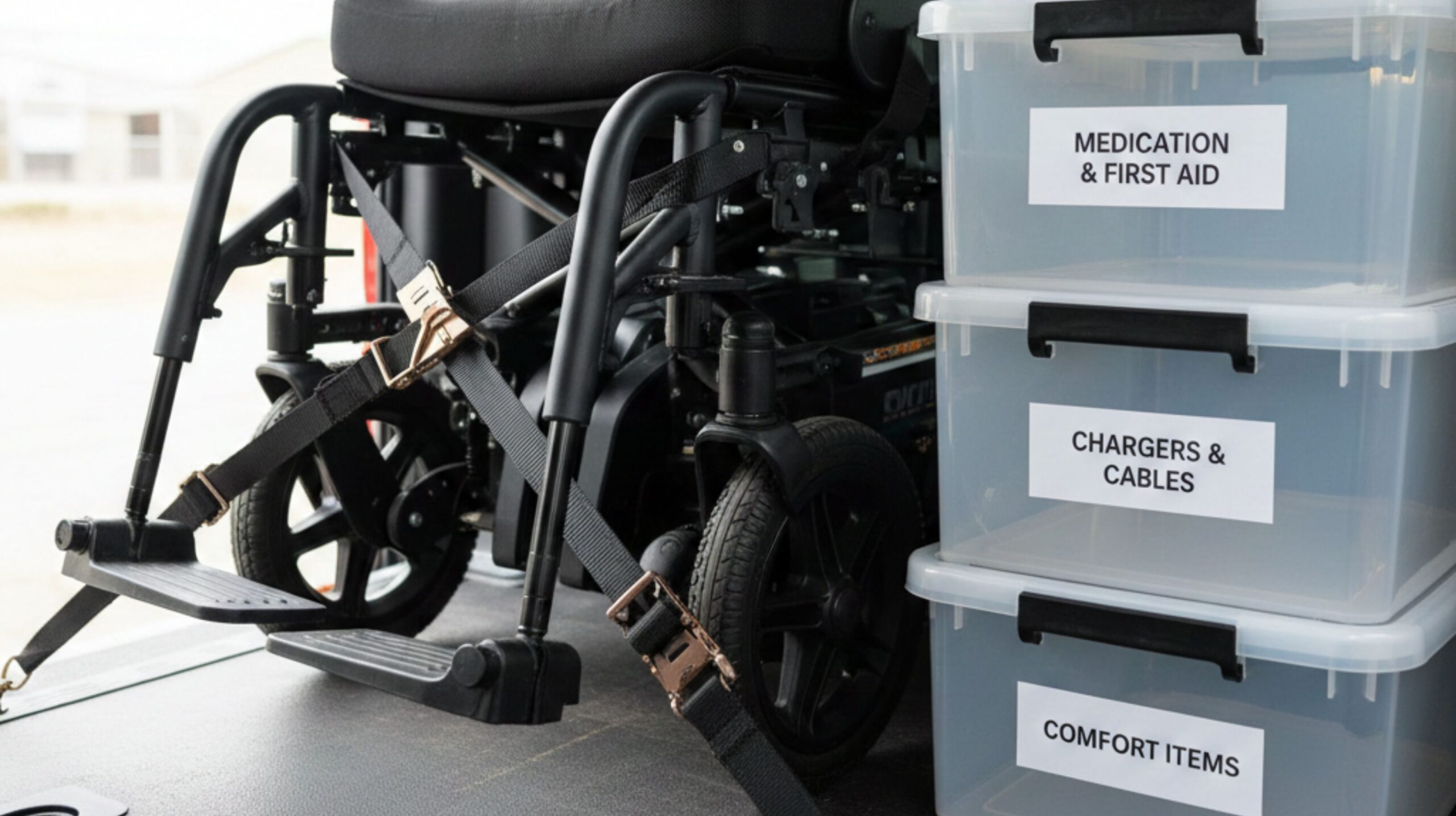
Since you’ll be traveling with wheelchairs, chargers, medical supplies, and personal gear, proper organization is essential to grab the required item without digging under seats or scrambling during stops. Here’s the best way to do it:
- Use labeled pouches or seat-back organizers to separate essentials.
- Store fragile or spillable items upright in bins or cup holders to prevent messes during turns.
- Keep high-priority items like medications, water, chargers, and snacks upfront for easy reach.
- Lock wheelchairs and mobility devices using anchoring floor systems, tie-down straps, or docking locks. Check them after every stop, especially on long drives or uneven terrain.
- Keep tie-down straps accessible so you can quickly adjust or retighten them without crawling under the van or unpacking gear.
- Balance weight distribution to prevent tipping, sliding, or instability while driving. This means placing heavier items low to the floor, keeping gear centered between the wheels, and avoiding overloading one side of the van.
- Since chargers and headphone cables can get tangled with seat rails or wheelchair straps, coil them neatly and place them in a small pouch.
- Use bungee cords or Velcro straps to secure loose items like blankets, jackets, or small bags that might slide on the floor.
- Consider a small net or cargo barrier between the seating area and rear storage to prevent items from sliding forward during sudden stops.
Helpful Van Upgrades
If you plan on taking a long road trip, you can request different rental van upgrades to stay comfortable. Swivel seats make transfers in and out of the van smoother, wheelchair lifts allow quick loading and unloading without physically straining a caregiver, and hand controls make it easy to get behind the wheel.
For a winter trip, the following enhancements will reduce risks and improve comfort on icy roads.
- Snow tires improve traction on ice and packed snow
- Heated mirrors prevent ice build-up that can block visibility
- De-icing kits save time clearing the windshield
- Windshield covers protect against frost and snow accumulation overnight
- Remote start lets the cabin and mobility equipment warm up before you load
How to Deal with Weather Challenges on Drives
Since the weather can change in a matter of hours, you must be prepared for rain, snow and ice, and heat in between.
Wet ramps can become slippery quickly, making boarding and exiting tricky. To stay safe, wipe down ramps before use whenever possible. Keep a microfiber cloth handy to quickly dry off controls, chargers, and any exposed buttons.
Winter roads bring another set of challenges. Most accessible vans have lower ground clearance, so icy ruts, packed snow, or uneven driveways can easily scrape the undercarriage. To avoid getting stuck, carry a small bag of non-clumping cat litter or sand to add traction under the wheels. Snow tires are essential, while a lightweight snow shovel is worth its weight in gold for clearing ramps, entrances, or parking spots.
By contrast, hot weather affects both passengers and equipment. Wheelchair batteries can lose 10–20% of their charge capacity in high temperatures, so plan shorter trips between recharges and carry spare batteries if possible. Since many conversion vans restrict airflow more than standard vehicles, keep van vents clear and avoid blocking them with luggage or blankets. Portable cooling options like seat fans, cooling towels, or UV window shades help keep the cabin comfortable during long summer adventures.
What to Do If Your Accessible Van Breaks Down
Even if your wheelchair-accessible van feels indestructible, things happen. Pack an emergency kit featuring jumper cables, spare tire, jack, flashlight, flares, reflective vests, portable air compressor, wrench set, warning triangle, and duct tape that‘s a miracle fix for everything except the engine. Keep it in a sturdy tote near the rear or side door so it’s reachable even if the van is tilted or partially blocked.
If there’s a problem that can’t be fixed on the spot, park away from high-traffic lanes and call roadside assistance. Since many towing companies aren’t automatically equipped for mobility vans, always specify your needs upfront. You may need a lift-equipped tow truck, a van that can carry your wheelchair safely, or even a temporary rental to keep your trip on track.
Book an Accessible Holiday Trip with Wheelchair Getaways
Whether your personal vehicle is in the shop, you only need accessible wheels once a year, or you’re a high roller ready for adventure, Wheelchair Getaways has rental vans across the U.S., so you can skip the dealership hunt.
Our wheelchair-accessible vans come equipped with a lower floor, in-floor/fold-out ramp, removable seating, one-touch controls, and various accessibility features for maximum comfort. Thanks to our short- and long-term rentals, you can book a modified vehicle for grocery runs, medical visits, airport transfers, holiday road trips, and long-distance family vacations.
Our flexible booking system lets you adjust dates or swap vehicles without jumping through hoops, so you’re never stuck with a van that doesn’t fit your needs. We also offer seasonal promotions and occasional flash deals that make renting an accessible van more affordable than you might think.
Ready for your next trip? Call us at (855) 419-4335 to reserve your accessible van today.