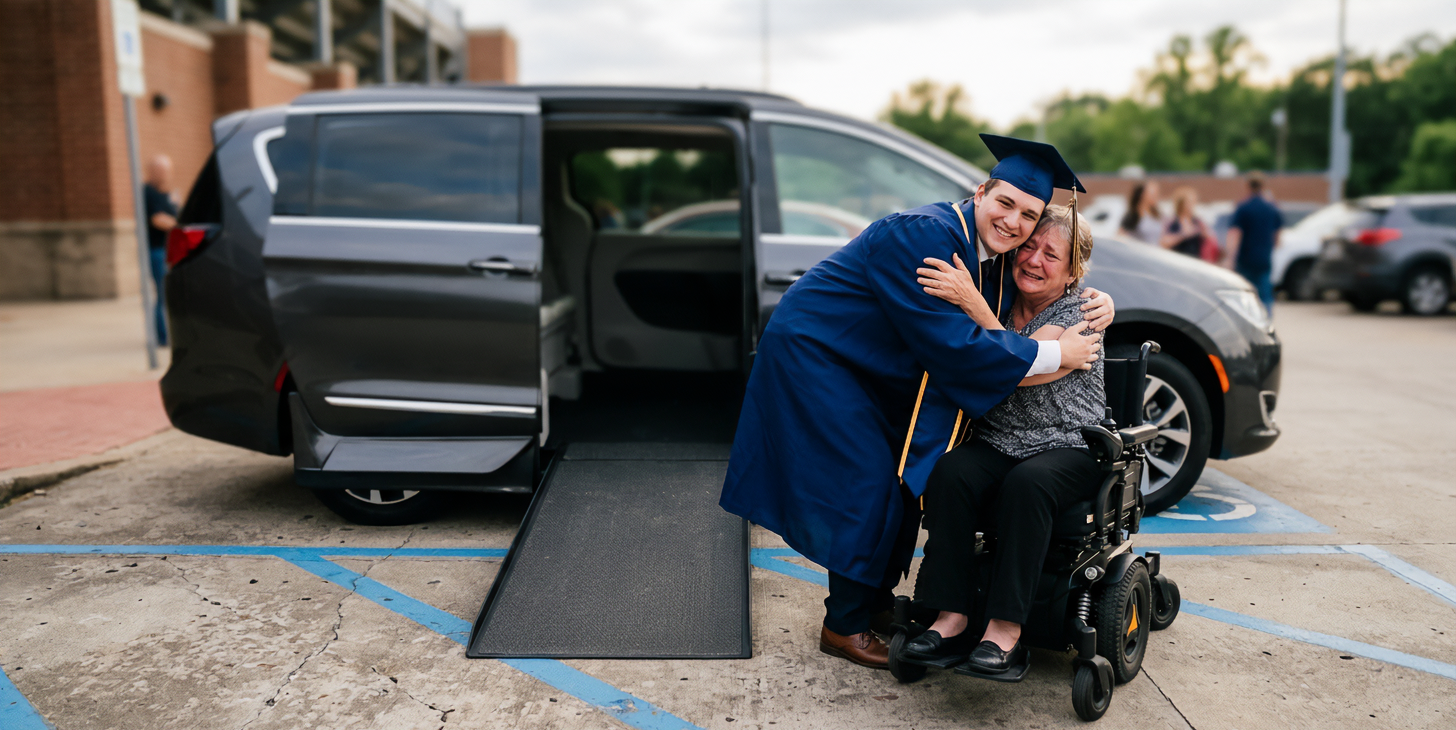
Graduation is a milestone moment for those who have attended 9 AM seminars, pulled all-nighters to complete assignments, managed their studies around medical appointments, and probably questioned their dissertation topic at least 27 times before submitting it anyway.
However, the ceremony itself comes with its own set of challenges. We’re talking about steep ramps, seating plans that somehow separate you from your classmates, and a coordinator who keeps saying “we’ll sort something out” without writing anything down.
But don’t worry. In this guide, we’ll share everything you need to know to make your graduation accessible.
Navigating the Campus: Pre-Event Logistics
According to the National Center for Education Statistics, around 21% of undergraduate students report having a disability. That’s roughly one in five people sitting in those graduation rows, yet many institutions still overlook the importance of choosing a truly accessible venue for the ceremony.
If you’re attending a graduation, take the time to confirm key details in advance. Ideally, you should contact the university’s accessibility office and the events team separately, because the person who handles disability accommodations is rarely the same person managing the event.
When you get in touch, be specific. “I use a wheelchair” is a starting point, but “I use a powerchair with a width of 65 cm, and I cannot transfer to a standard chair” is actionable information. The more concrete you are about your equipment and your needs, the less stressful your day will be.
Accessible Parking and Entrance
Universities usually have well-marked accessible parking spaces. But between the car park and the accessible entrance, there is decorative paving, a temporary setup for the procession, and a marshal who is very sorry but cannot move the barriers because they are part of the route.
Now that’s where things get tricky, but it doesn’t have to be.
What to confirm before the ceremony day:
- The exact location of accessible parking on the day of the event
- Whether the accessible drop-off zone allows enough time and space for a relaxed exit from a vehicle or an adapted van
- Whether there is a curb-free, leveled route from the parking to the accessible entrance that does not require you to cross the main procession route
- Who to call if the accessible parking area has been coned off for any reason
If the answer to that last question is “just ask any of our volunteers on the day,” keep asking until you get a name.
Digital Accessibility for Inclusive Commencement Ceremonies
While on-the-ground experience is convenient, many institutions now use digital wayfinding systems or interactive campus maps that let you explore routes in advance. These systems are designed to help users:
- Locate accessible entrances
- Identify elevators in real time
- Highlight ramps and step-free routes
- Estimate travel time between buildings
- Avoid inaccessible paths like stairs or uneven terrain
Since Wi-Fi can be unreliable on crowded graduation days, take screenshots or enable offline access if possible.
Like what you’re reading? Subscribe to our newsletter and get new updates directly to your inbox.
Stadium and Venue Seating: Accessibility Questions That Matter
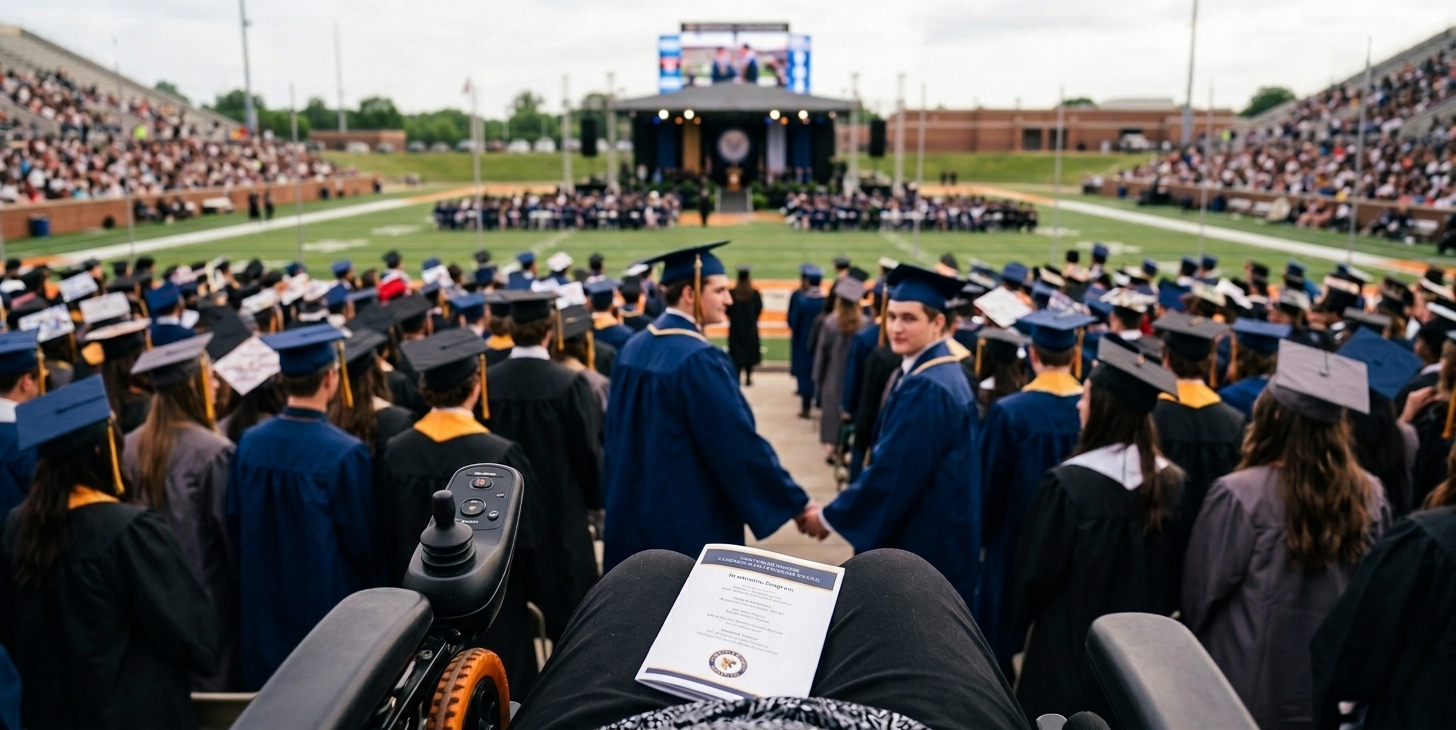
Once you’ve figured out the parking and entrance, it’s time to pay attention to the stadium and seating arrangement. Ask for a site visit or a rehearsal walk-through if you can. Even a five-minute tour of the stage route the day before can reveal problems while there is still time to fix them. If a site visit is not possible, ask for photographs or a blueprint of the route. A ramp that looks fine in someone’s head often looks rather different in practice.
Ideally, the stadium should have adequate space at the top and bottom of the stage for safe turns or pauses, marked routes that don’t intersect crowded walkways, a side entrance to the stage, and a stable ramp, so you can confidently move to the stage and collect your diploma.
As for the seating, accessible chairs are usually placed at the side of the hall, at the very front where you cannot see the stage properly, or at the very back where you have an excellent view of other people’s heads and hairstyles. This can be quite frustrating to say the least. To avoid that, ask the following questions of the event coordinator:
- Can I sit with my classmates?
- Is there adequate space alongside your seat for a carer, personal assistant, or family member who needs to be close by?
- What is the sightline from the accessible seating to the stage?
- Are accessible toilets located inside the main venue? Do they require exiting the building and re-entering through a different door?
There should be integrated seats at a reasonable distance from the stage. Guest seating matters too. Under the Americans with Disabilities Act, wheelchair users can purchase up to three additional seats for companions in the same row, so you’re not split up during the ceremony. If a family member also uses a wheelchair, highlight that separately, since accessible guest seats are usually limited and sometimes require advance allocation.
Graduation Travel: Beyond the Ceremony
While the ceremony only lasts a few hours, the trip around it might take two or three days, depending on your location.
If you are flying, inform the airline of your mobility needs well in advance for proper assistance. Similarly, if you’re using trains or buses, pre-book accessibility assistance, confirm ramped boarding, and check space availability for your mobility device in advance.
Since trains and buses run on schedules, we recommend booking a private accessible vehicle for the day. Yes, chauffeur-driven limousines look great in movies, but these wheelchair-accessible vehicles come equipped with ramps or lifts, secure tie-down systems, and spacious interiors, so you can travel without the usual transit hassles.
Coordinating Family Transportation
If your parents, grandparents, or cousins are coming to your graduation, organize one shared vehicle for the whole group, so you won’t have to worry about multiple arrival times, parking headaches, three lost uncles, and a hundred phone calls regarding the meeting point.
If a single vehicle isn’t possible, try to pair people strategically so that no one who needs accessibility support is left to manage logistics alone.
Accessible Accommodations for Out-of-Town Guests
If you or your guests are traveling in, book an accessible hotel and verify everything.
When booking accessible accommodation:
- Call the hotel directly and ask specific questions: Is the accessible room on the ground floor or served by a lift? What is the door width? Does the bathroom have grab bars and a roll-in shower? Is there enough turning space beside the bed?
- Ask whether the hotel restaurant, bar, and breakfast area are all accessible
- Confirm the hotel’s accessible parking and whether it is on-site or nearby
A Checklist for an Accessible Graduation Planning
It’s easy to forget the practical details when you’re busy celebrating, but here’s a quick graduation accessibility checklist to save you from last-minute chaos:
- Contact the accessibility office and events team separately at least 8 weeks before the ceremony
- Confirm the stage crossing route in writing and ask for photographs or a diagram
- Request seating integrated with your cohort, not a separate accessible block
- Arrange guest accessible seating, noting if a carer or PA needs to be adjacent
- Check the gown hem length with the hire company and request alterations so it doesn’t drag on the wheels
- Confirm the accessible drop-off location and its proximity to the accessible entrance
- Identify your on-the-day point of contact and save their number
- Locate accessible toilets before the ceremony begins
- Charge your powerchair the night before the big day
Arrange Accessible Transportation with Wheelchair Getaways
With availability in more than 200 locations nationwide, Wheelchair Getaways has you covered from your hotel to the graduation venue and post-ceremony celebration spot. Our fleet of accessible vans comes fully equipped with ramp or lift entry, wheelchair tie downs, and enough space for your mobility device, your gown bag, and a bouquet of flowers.
Thanks to the flexible rental period, you can rent a wheelchair-accessible van for the ceremony afternoon or a three-day weekend that includes the pre-graduation family dinner and the post-graduation brunch.
We also offer seasonal deals and discounts, so it is worth checking current offers before booking. To get started, simply fill out the online booking form or call the team directly at 855-419-4335 to discuss your vehicle requirements.