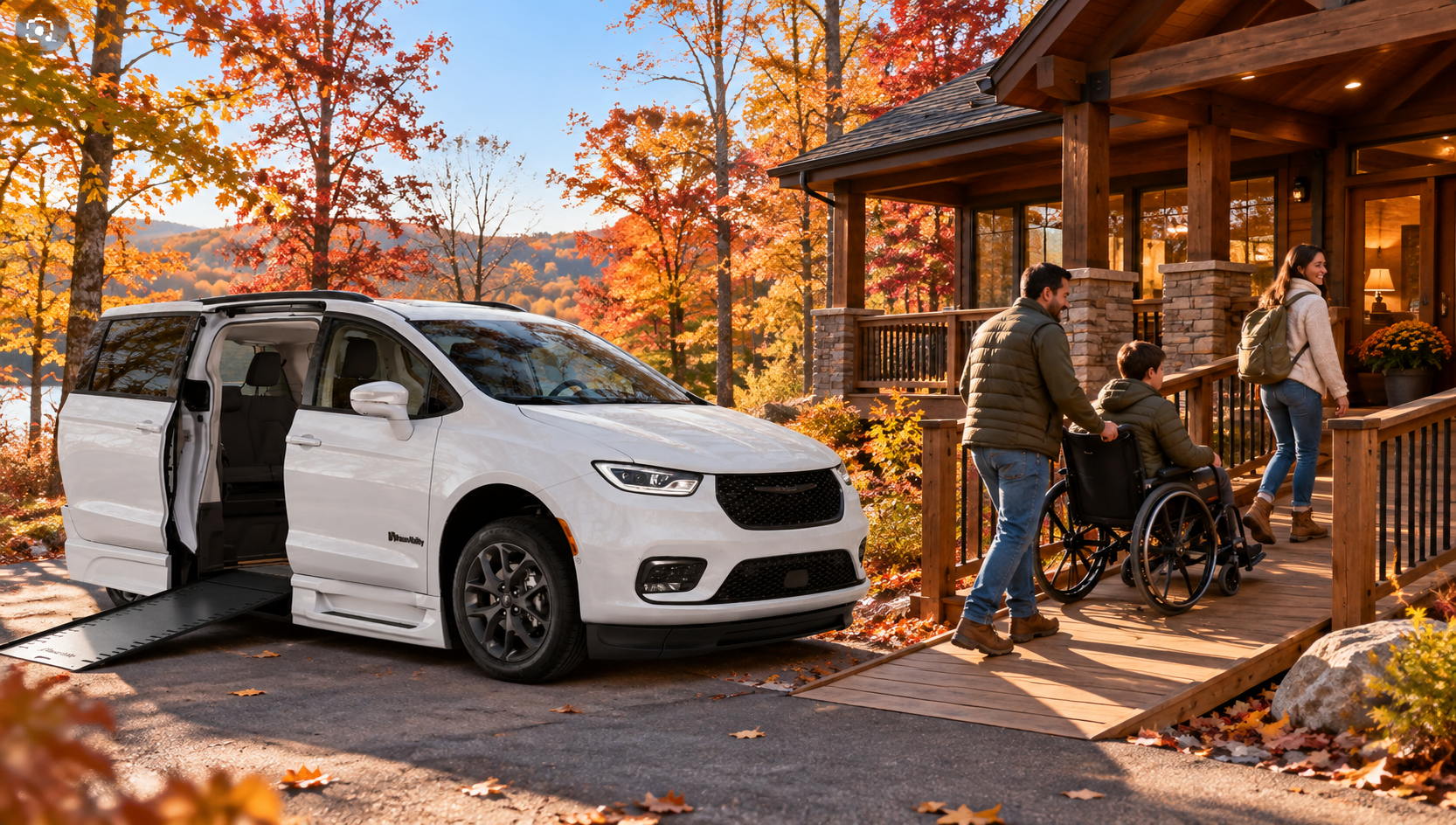
As forest canopies shift into brilliant shades of amber, red, and gold, autumn offers some of the best conditions to explore state parks. For families and adaptive travelers, autumn trips mean avoiding high-summer heat, managing fewer crowd bottlenecks, and enjoying peaceful, unhurried miles on the highway.
Fortunately, accessible state park glamping includes climate-controlled cabins, modern yurts, and hard-sided safari shelters for a comfortable trip. The catch is that “accessible” means different things from one park system to the next. One park’s ADA cabin may have a roll-in shower while others have a shared bathhouse a “short walk” away, which can mean 60 feet or a small pilgrimage.
Here’s everything you need to know about handicap accessible park cabins, so the only surprise on your trip is how early it gets dark.
4 Non-Negotiable Accessibility Features in Glamping Lodging
While state park systems nationwide have expanded their upgraded lodging options, accessibility standards can vary significantly between older historic sites and newly constructed cabins. Before booking, ask about the following four things:
Step-Free Entries and Paved Approach Paths
A cozy park cabin is only as good as the pathway leading to its front door. Avoid sites that require traversing thick gravel, loose woodchips, or steep grassy slopes to reach the entrance ramp.
Look for lodging facilities that feature continuous, smooth asphalt, concrete, or composite boardwalk approach paths directly from the parking area. The ramp slope should be no steeper than 1:12 (one inch of rise per foot of length), with a door at least 32 inches wide and a threshold no taller than half an inch, allowing manual and power wheelchairs to transition indoors without jarring bumps.
Zero-Threshold Roll-In Showers and Bathroom Clearances
Bathrooms are often the most critical failure point in rustic park rentals. Never assume a cabin labeled “accessible” has a true roll-in shower unless the facility profile specifies it.
If there is a private bathroom, verify that it includes a zero-threshold roll-in shower with a fold-down bench, a handheld showerhead, and securely anchored wall grab bars. According to the National Recreation and Park Association (NRPA), accessible park restrooms must also provide a 60-inch turning radius inside the space and roll-under sink counters to support independent daily routines.
Accessible Outdoor Living Spaces
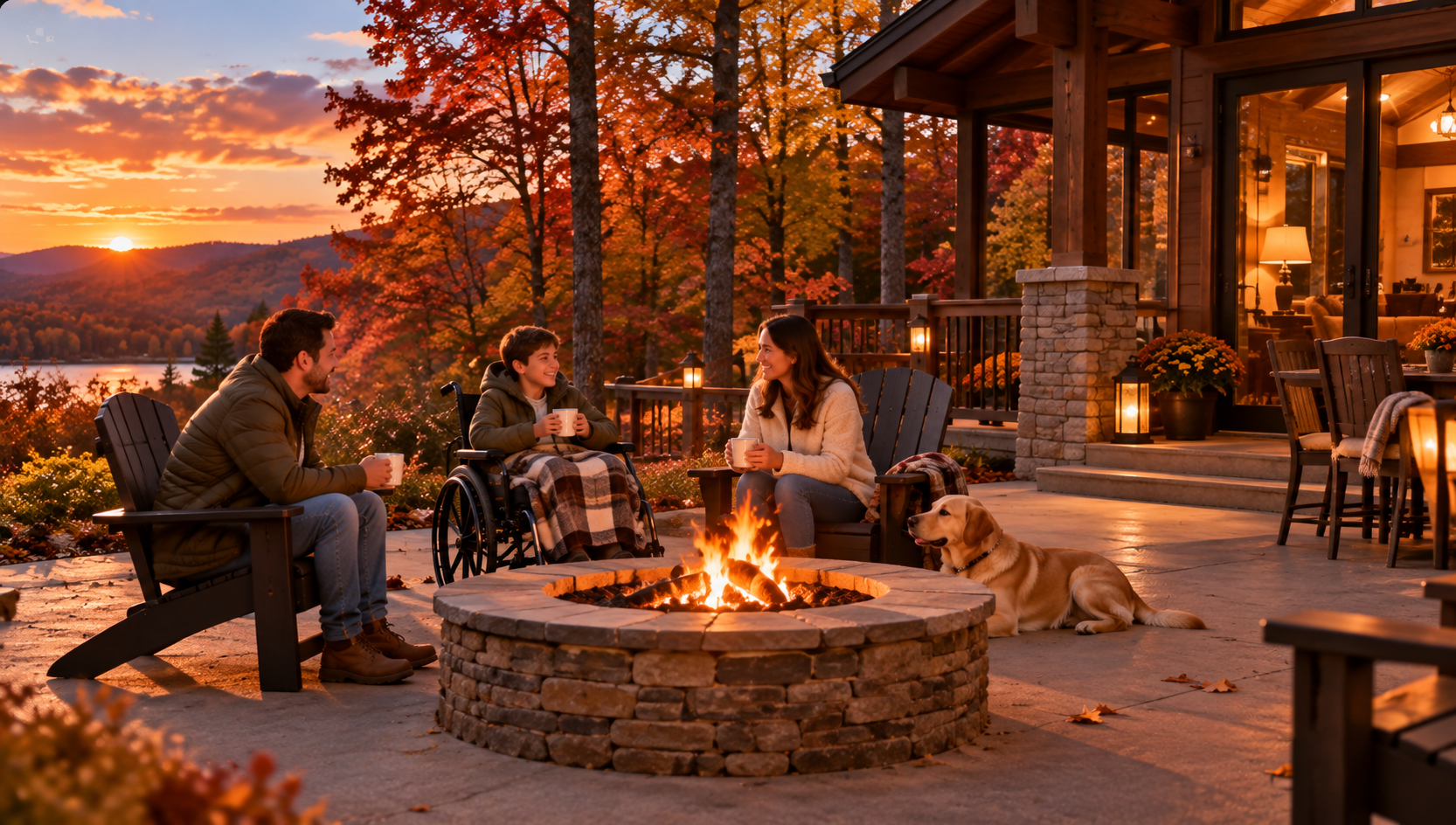
Half the point of glamping is sitting outside and enjoying a campfire, so the patio matters as much as the cabin.
Check that your site includes a paved concrete patio extending outward from the cabin entry. The fire ring should have 18 to 24 inches raised outer walls, so guests can enjoy the fire safely from a seated position without reaching down to ground level.
Picnic tables should offer extended-end overhangs, providing integrated seating for wheelchair users alongside family members.
Accessible Sleeping Layouts
Yurt beds can be surprisingly awkward. Some rustic units mix bunk beds, futon couches, and double beds with vinyl mattresses.
Review the floor plan before booking. Ideally, there should be at least 36 inches of clear floor space along at least one side of the bed for smooth lateral transfers. Ask about the outlets as well. If it’s next to the bed, you will be able to charge your chair and other essentials overnight without a cord running across the floor.
Autumn Climate Control & Heating Verification
Fall weather can be unpredictable. Bright, sunny afternoons often give way to sub-freezing overnight temperatures, making reliable heating and insulation essential for traveler health and muscle comfort.
Insulation and Temperature Stability
When assessing yurts or canvas safari tents, confirm that the units are multi-season rated and feature hard-sided insulation paired with built-in electric or propane heating units.
Choose modern timber cabins or winterized yurts equipped with digital wall thermostats to maintain a steady, warm ambient temperature throughout the night. Cold also cuts battery range on power chairs, so plan to charge indoors overnight rather than in the van.
Secondary Vehicle Climate Support
Highway drives through mountain passes or shaded forest corridors often experience sudden temperature shifts. If you are renting a conversion minivan from Wheelchair Getaways for your autumn road trip, make sure your vehicle features multi-zone climate control. Independent rear heating controls allow rear passengers to keep their local cabin area warm and cozy during travel between park sites.
Like what you’re reading? Subscribe to our newsletter and get new updates directly to your inbox.
Vehicle Staging & Site Arrival Logistics
A successful glamping trip depends heavily on how smoothly your vehicle integrates with your campsite layout. Proper parking placement protects your energy during loading and unloading.
Dedicated Paved Parking Bays
Some offers include parking for one vehicle with each cabin or yurt reservation and allow a second for an extra daily fee. Ensure your assigned glamping unit includes a dedicated, paved parking pad positioned directly alongside the cabin walkway. This way, you can unload luggage, medical equipment, and cool-weather gear without traversing uneven terrain.
Side-Ramp vs. Rear-Ramp Unloading on Park Sites
Match your vehicle entry configuration to the geometry of your campsite:
- Side-Entry Vehicles: These models require 8 feet of clear space on the passenger side. They work best on double-deep paved parking pads, allowing the ramp to deploy directly onto a concrete walkway connected to the cabin ramp.
- Rear-Entry Vehicles: The ramp deploys straight out behind the vehicle bumper onto the paved driveway lane, providing safe clearance regardless of lateral obstacles. This makes them ideal for narrow pull-in driveway sites bordered by trees or stone retaining walls.
Federal standards set RV parking spaces at accessible camping units at a minimum of 20 feet wide, and a pad that size gives either ramp style plenty of room. If you’re not sure which layout fits, send the park your van’s ramp position and ask them to match it to a site.
Fall Glamping Preparation Checklist
Review this pre-trip operational checklist before heading out on your autumn park adventure:
- 72-Hour Cabin Audit: Call the local park headquarters to confirm your reserved cabin has a roll-in shower and a step-free entry ramp.
- Vehicle Clearance Check: Verify overhead tree branch clearance along park access roads if operating a high-top vehicle layout.
- Park Pass Verification: Secure state park vehicle entrance passes online prior to arrival to streamline main gate entry.
- Layered Apparel Staging: Pack warm fleece layers, windproof jackets, and thermal blankets inside the mid-cabin vehicle space for quick access during scenic drives.
- Site Lighting Prep: Bring rechargeable, magnetic LED lanterns to illuminate cabin ramps and paved patio paths during early autumn sunsets.
Book Your Autumn Park Retreat
Fall is a magical time to explore the outdoors, and accessible state park glamping brings nature within comfortable reach for everyone. The difference between a great trip and a frustrating one usually comes down to a few phone calls before you book. Ask about the accessible features and request photos whenever you can. Then grab a blanket, get a spot by the fire, and let the squirrel have one peanut. Just one.
Ready to plan your trip? Wheelchair Getaways rents wheelchair accessible vans with rear-entry and side-entry layouts, lowered floors, power ramps, and tie-down systems, so you can pick the van that fits your campsite. Call us at (855) 419-4335 or request a quote online to reserve a van for a fall trip.