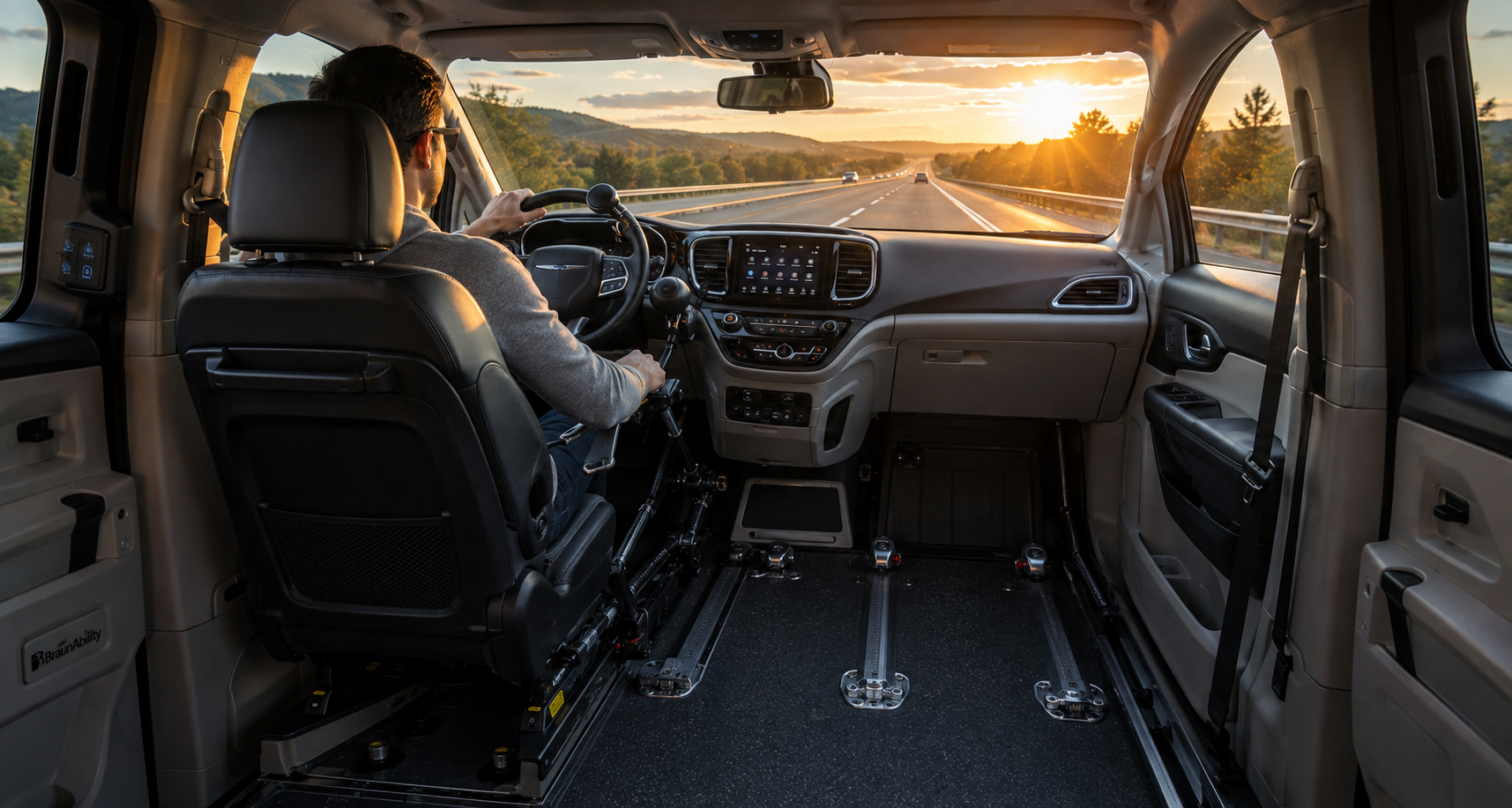
Some people plan road trips down to the last coffee stop. Others point at the map and say, “That looks interesting,” then figure out the rest later.
If you plan on traveling, somewhere in between is probably your sweet spot. A solo wheelchair road trip gives you complete control over your day. You can leave early to beat traffic, stop for lunch whenever you are hungry, spend an extra night somewhere you unexpectedly love, and have complete control of the playlist. Honestly, that alone may be worth the trip.
However, a successful solo wheelchair road trip requires more planning than just tossing a bag in the trunk and following the highway signs. In this guide, we’ll cover everything you need to know about adaptive driving equipment, wheelchair access, and rest areas, so you don’t have to worry about anything going wrong and can enjoy the road ahead.
Calibrating Your Vehicle for Independent Operation
Your wheelchair-accessible vehicle should make solo travel easier, not turn every parking lot into an engineering project. Before a long trip, spend time getting familiar with every adaptive feature you will use.
Selecting the Right Adaptive Driving Controls
The right controls depend on your strength, range of motion, driving style, and vehicle setup. Common options include push-pull hand controls, push-twist systems, and spinner knobs.
Push-pull controls typically allow the driver to control acceleration and braking with a hand lever. Push-twist systems combine throttle and braking movements, while spinner knobs can make steering easier when a driver needs to operate the wheel with one hand.
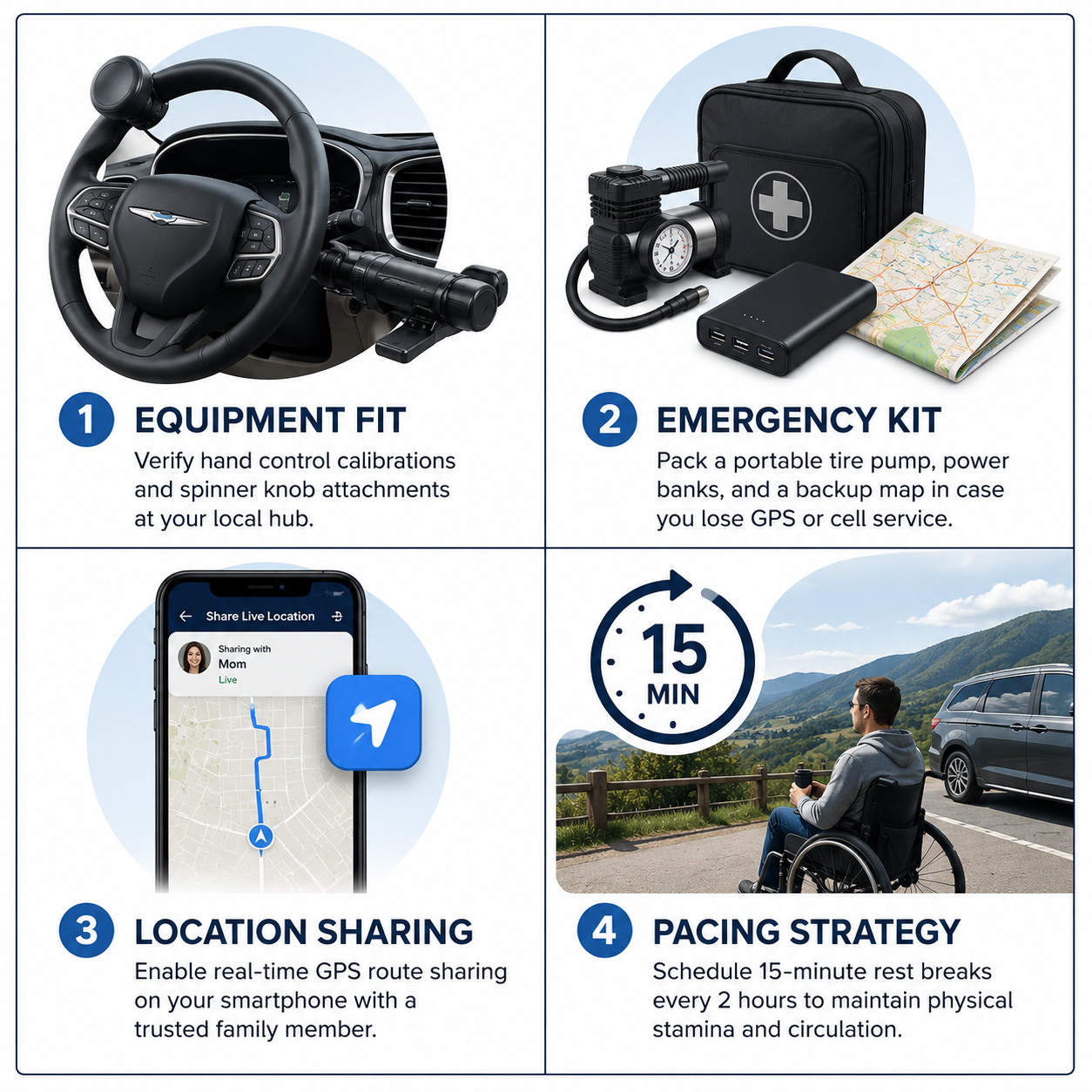
The important part is proper fitting. Qualified professionals should install and adjust adaptive equipment based on the vehicle and the driver’s needs. A control that feels fine for a ten-minute drive may become a very different story after four hours on the interstate.
If you’re arranging a hand-control van rental, confirm the system type and ask about adjustments before you drive off the lot. Don’t forget to test your setup on local roads. Try parking, turning, braking, merging, and driving at highway speeds. Pay attention to your wrists, shoulders, grip, and overall comfort.
The objective is simple: you should be thinking about the road, not the equipment.
Automated Lifts vs. Power Side-Ramp Deployments
Full-size wheelchair-accessible vehicles usually come equipped with automated lifts, and minivans typically employ power side ramps.
Automated lifts, usually mounted at the rear or side of the vehicle, hoist your wheelchair up and into the cabin with the push of a button. They’re solid, especially for larger power chairs, but they typically load you into a cargo or passenger area rather than the driver’s seat itself, so you’re often still transferring once you’re inside.
Power side-entry ramps work differently. They unfold at the side door, giving you a smooth, drivable path straight into the vehicle without waiting for someone to assist. Some accessible vehicles also offer remote controls or key-fob functions to operate doors and deploy ramps.
If you are renting a vehicle, ask exactly how the accessible features, including doors, ramps, and wheelchair securement systems, operate before leaving the rental location. Do a practice run. Then do another one. Nobody wants their first attempt at operating an unfamiliar ramp to happen in a busy hotel parking lot while six strangers silently watch.
Transfer Seats and Drive-From-Wheelchair Configurations
There are two common approaches for wheelchair users who drive.
- 6-way power-transfer seats slide, rotate, and lower to meet you partway, allowing you to transfer from your wheelchair into a standard driver’s seat. Good for drivers who prefer a traditional seated driving position.
- Drive-from-wheelchair setups skip the transfer entirely. With an automated docking system such as EZ Lock, the wheelchair can be guided into a floor-mounted docking base and secured without manually tightening traditional straps. EZ Lock states that its driver applications require the appropriate stabilizer and vehicle lap and shoulder belts, so compatibility and professional installation matter.
The right setup depends on your own transfer ability and how your body feels after hour five versus hour one. If you haven’t tried both, do a test drive before committing.
Smart Route Planning & The Fuel Accessibility Secret
A good route is more than a blue line on your navigation app. For a solo traveler, it should answer a few practical questions before you leave.
Where can I refuel? Where can I stop? Where can I deploy my ramp? What happens if I need to pull over earlier than planned?
Mastering the Refueling Routine With Fuel Assist Programs
Fuel stops deserve more attention than they usually get. Wheelchair van fuel assist programs and ADA guidance both work in your favor here.
Under ADA guidance, gas stations must provide refueling assistance for disabled drivers at self-service pumps.
Apps like FuelCall or AccessibilityNow let you request an attendant before you even pull in, so someone’s often walking out to meet you at the pump. Keep a placard visible on your dash the whole trip because it’s the fastest signal you’ve got.
Pro tip: Nobody mentions it on the gas station’s own website, so call ahead to smaller regional chains along your route the day before. Confirm they actually have staff during your expected arrival window, especially for overnight or early-morning fill-ups.
Strategic Rest Area Selection & Perimeter Parking
When choosing rest stops, look beyond the restroom rating.
You need enough space to safely deploy a ramp or lift, maneuver your wheelchair, and move around the vehicle. Perimeter parking spaces can sometimes offer more room than standard spaces, although layouts vary widely.
Before stopping, check satellite imagery or recent accessibility information when available. Look for:
- Perimeter spots near the building entrance, not tucked behind a semi truck row
- Flat, paved ground rather than gravel or a slope, since ramps must be deployed on leveled space
- Multiple parking choices with wide parking areas
- Well-lit locations if traveling after dark
- Distance from parking to the accessible restroom door
- Food or convenience options when needed
Apps and route planners increasingly flag accessible rest stops directly, so you can build these into your route before setting out.
Like what you’re reading? Subscribe to our newsletter and get new updates directly to your inbox.
Solo Traveler Emergency Readiness & Tech Stack
Adaptive vehicle solo travel safety comes down to thorough preparation, not luck. It will help you stay calm when something doesn’t go as planned.
Digital Navigation & Accessibility Wayfinding Apps
Regular GPS gets you to your desired destination, but accessibility-focused tools can add another useful layer.
Look for apps and platforms that provide information about step-free entrances, curb cuts, roll-in restroom facilities, handicapped parking, and other mobility-related features. Crowd-sourced information can be particularly useful because accessibility can change. A restaurant may have an accessible entrance, for example, but that entrance could be blocked by construction this week.
Save important locations offline when possible. Download your route. Keep addresses for hotels and major stops somewhere you can access without relying entirely on cellular service.
The Solo Emergency Kit and Hardware Backups
A compact emergency kit can save a minor problem from becoming a major interruption.
Consider carrying:
- Portable tire inflator and pressure gauge
- Manual wheelchair securement backup equipment
- Extra mobility equipment charging cables
- Backup power bank
- Basic vehicle emergency supplies
- Flashlight
- Phone charging adapter
- Emergency contact information
- Satellite communicator for remote routes where cellular coverage may be unreliable
For adaptive equipment, follow the manufacturer’s recommended backup and maintenance procedures. Do not improvise with securement hardware or substitute random straps, as this may damage the equipment.
Independent Road Trip Preparation Checklist
Use this quick pre-trip checklist the day before departure:
- Verify hand control linkage, positioning, and adjustment.
- Test the ramp, lift, doors, remote, and key-fob functions.
- Check ramp or lift battery levels.
- Confirm wheelchair securement and docking equipment.
- Review your auto insurance declaration page and roadside assistance coverage.
- Pack the emergency kit
- Check weather and road conditions before departure.
- Pre-map gas stations and rest stops every 150 to 200 miles, adjusting for your vehicle’s actual range.
- Save important addresses and directions offline.
- Share real-time digital location tracking with a trusted family member or friend
Managing Physical Stamina on Long Solo Drives
A road trip can be physically demanding even when you are sitting down and driving.
Long stretches of driving can create fatigue, stiffness, pressure discomfort, and shoulder or wrist strain. Adaptive driving adds another layer because you may be using different muscle groups than you would with conventional controls.
To avoid issues, build breaks into the trip before you feel like you desperately need one. Stop somewhere safe, get out of the driving position, change your posture, and give your body time to reset. If you use pressure relief techniques or mobility routines, schedule them into your travel day rather than treating them as optional extras.
Give yourself flexible windows instead of rigid mileage goals. “I’ll get to the next big town by evening” beats “I must hit 500 miles today” every time, because the second one turns a fun trip into a race against your own body.
For solo wheelchair travel, pacing is part of independence. Knowing when to stop is just as important as knowing how to keep going.
Plan Your Solo Trip with Wheelchair Getaways
A solo wheelchair road trip is all about building a travel setup that lets you make your own decisions. Choose a wheelchair-accessible vehicle, plan a fuel-and-rest-stop strategy, pack smart, and travel at a comfortable pace, whether you’re heading to the Universal Studios theme park or a coastal town three states away.
Ready to make it happen? Wheelchair Getaways offers wheelchair-accessible van rentals through locations across the United States. Our rental fleet includes accessible minivans with features such as ramps, lowered floors, removable seating, and, at many locations, hand controls and steering knobs. Don’t forget to inquire about deals and discounts before booking. Call us at (855) 419-4335 for more information or fill out the online form to get a rental quote.