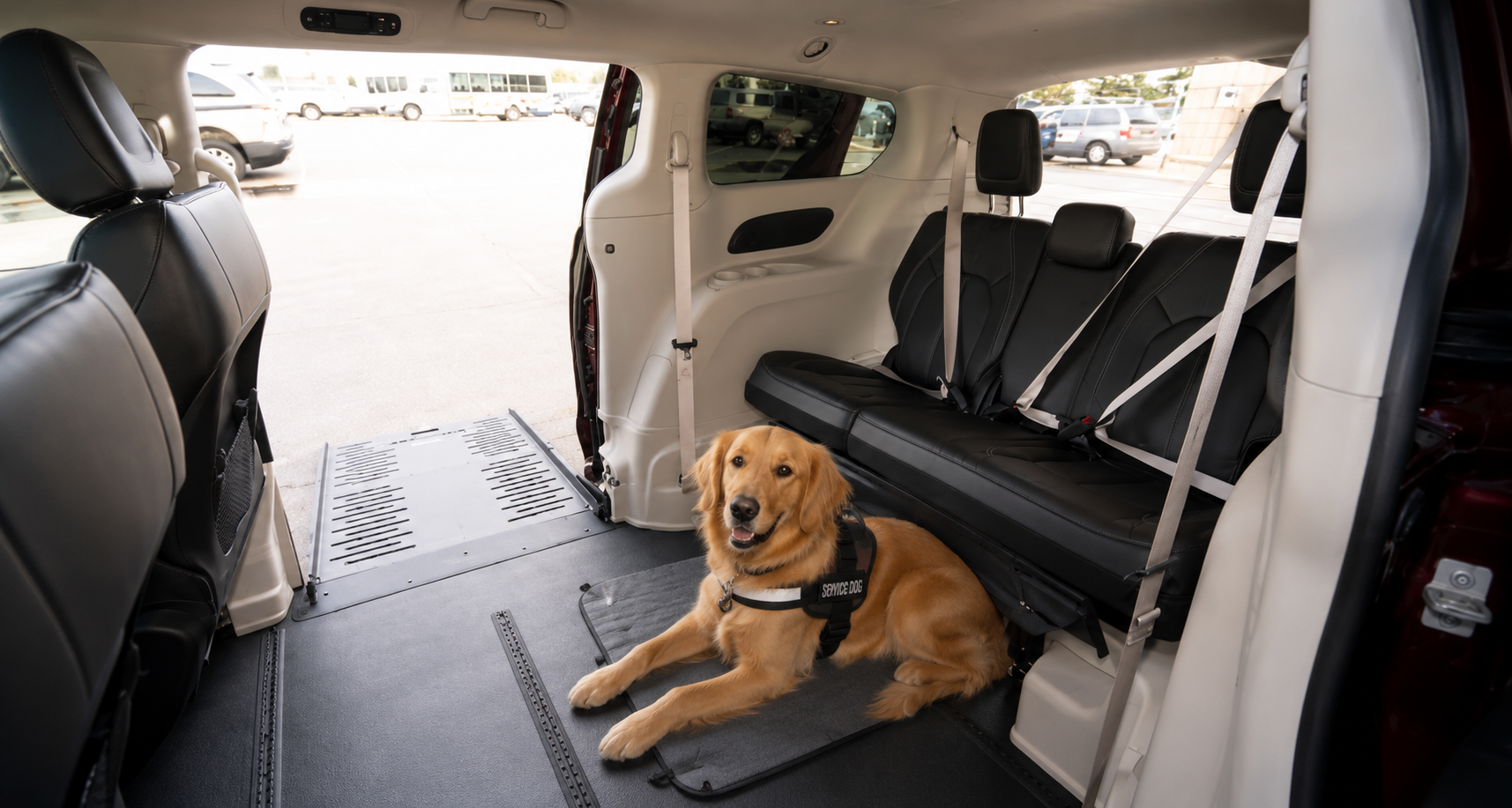
Your service dog shows up for you every single day, despite bad moods, big crowds, and weird noises.
But here’s something most handlers learn the hard way: your dog can handle almost anything except a hot car during summer trips. Radiant asphalt heat in parking lots and floor-level air circulation inside passenger cabins can overheat service animals, reducing their focus and energy levels.
The fix isn’t complicated. With proper vehicle climate management, cabin positioning, and rest-stop logistics, you can avoid those problems and keep your most dependable travel companion happy from departure to destination.
Canine Physiology vs. Summer Vehicles: The Hidden Heat Hazards
The first step in effective summer travel planning is understanding how service dogs regulate their temperature. Unlike humans, who regulate body temperature through whole-body perspiration, dogs cool themselves primarily through panting and a small amount of heat loss through their paw pads.
When confined to a vehicle interior or moving across sunbaked pavement, this thermal exchange mechanism can quickly become overwhelmed without proper air circulation and surface protection.
Floor-Level Airflow Dynamics in Large Vehicles
A common oversight during summer road trips is assuming that a cold dash air-conditioner keeps the entire cabin equally comfortable. The truth is, standard dashboard vents send cool air toward the chest and face level. Meanwhile, the floor often receives much less airflow.
Unfortunately, that floor space is exactly where many service animals spend the majority of the ride.
This creates temperature layers inside the cabin, which is even more noticeable in:
- Full-size wheelchair vans
- SUVs
- Passenger vans
- Larger accessible vehicles
A dedicated rear climate control system helps solve this problem by pushing cool air down toward the floor track area, keeping your working partner safe from thermal buildup.
The Radiant Asphalt Threat in Parking Lots
During summer, dark asphalt parking lots and concrete loading zones absorb intense solar radiation throughout the day, holding heat long after ambient air temperatures begin to cool.
Even when the air temperature is around 85 degrees Fahrenheit, dark pavement reaches approximately 130 degrees Fahrenheit, causing painful burns or severe tissue damage within seconds.
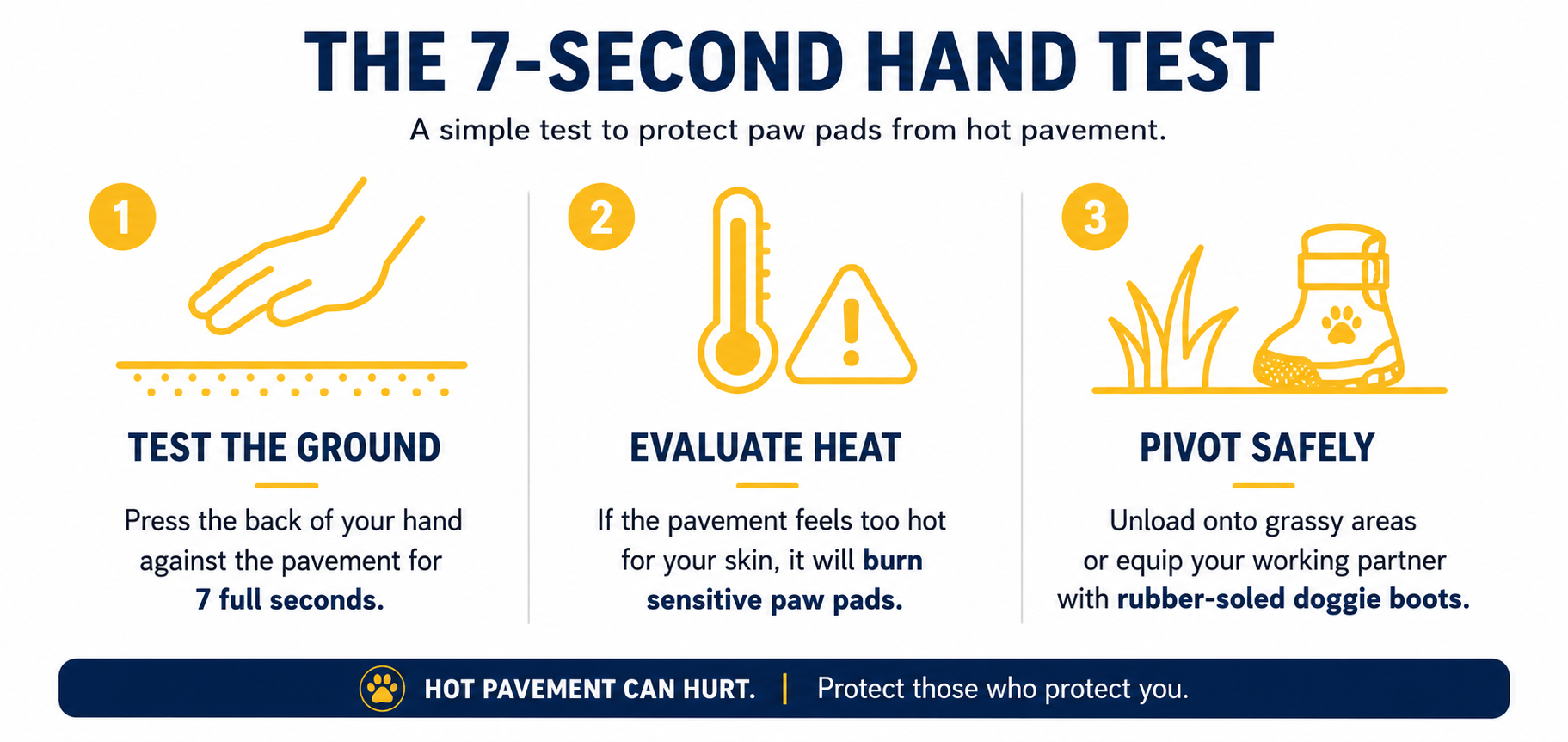
Before asking your service animal to walk across pavement, perform the simple 7-second hand test.
Place the back of your hand firmly against the pavement surface for seven seconds. If it feels uncomfortable against your skin, it might be too hot for your working partner’s bare paws.
Whenever possible:
- Park near shaded areas.
- Use accessible loading zones with grassy edges.
- Look for concrete instead of dark asphalt.
- Unload using ramps positioned away from direct sunlight.
- Time your stops for early morning or after 6 PM.
- Keep a rolled towel or portable mat in the van.
Regional Heat Considerations: Desert Driving vs. Humid Climates
If you’ve road-tripped through both a Phoenix summer and a Houston summer, you already know that dry heat and humid heat stress a working dog’s body in completely different ways, so check the heat index when you plan a route through either climate.
Desert routes (Phoenix, Vegas, the whole Southwest sun belt)
Dry heat feels almost deceptive because panting still works reasonably well in low humidity, evaporation happens fast, so dogs cool themselves more efficiently than you’d expect.
In the Southwest, there’s often zero shade for miles and high temperatures that can burn skin. Handlers in desert climates should lean hard into:
- Early morning or late evening drive windows, avoiding the 11 AM to 4 PM furnace hours entirely
- Extra water on hand, since dry air pulls moisture out of a panting dog faster than humid air
- Reflective window coverings, since desert sun through glass is brutal even with the AC
Humid routes (Houston, Atlanta, most of the Gulf Coast and Southeast)
When the air is already saturated with moisture, evaporation slows way down or basically stalls out. This means a dog can be panting hard in 90 percent humidity and get almost no cooling benefit, so heat builds up in the body much faster than the outside temperature alone would suggest.
In humid climates, prioritize:
- More frequent rest stops
- Active cooling tools like damp towels or cooling vests, since passive panting isn’t pulling its weight
- Watching for early fatigue even on days that don’t feel like record-breakers on the thermometer
Like what you’re reading? Subscribe to our newsletter and get new updates directly to your inbox.
Optimize Your Vehicle Layout for Service Animal Comfort
When structuring your vehicle interior for hot-weather travel, balance securement with airflow and physical space. A well-planned cabin layout gives your service animal room to stretch out comfortably without placing them in direct sunlight or trapping them in warm dead-air zones.
Selecting the Ideal Cabin Placement Zone
Many handlers assume the rear cargo area provides the most room.
Sometimes it does. But rear cargo spaces often receive more sunlight through large windows and may have weaker airflow.
During summer trips, consider placing your working dog in the mid-cabin area, either alongside or just behind a wheelchair securement point. This direct path will keep their body from any radiant heat coming through the vehicle floor pan. If possible, reposition your dog’s mat or bed as the sun shifts or use a breathable window shade on the sunny side to protect him from overheating.
Utilizing Four-Point Securement & Breathable Harnesses
Safety matters just as much as comfort.
When traveling on the open highway, use a crash-tested vehicle restraint tether attached to a lightweight, breathable chest harness to prevent sliding during turns and sudden stops. Avoid heavy leather or thickly padded neoprene vests as they trap body heat against the torso.
Ideally, it should be comfortable enough so your dog can lie down, shift positions, and pant freely without any part of the harness system restricting their chest or throat. If your current setup makes your dog pant harder just to get comfortable, it’s time for an upgrade.
Managing Temperature Sensitivity with Rear Climate Control
When reserving a vehicle at your local Wheelchair Getaways Location, verify that your assigned model has independent rear-seat climate controls. Secondary climate systems let you set a lower temperature or a higher fan speed for the rear floor tracks without freezing out front-seat passengers.
Hot-Weather Travel Preparation Checklist
Before every summer trip, run through this quick checklist.
- Hydration Gear: Pack a spill-proof travel water bowl and keep at least 2 gallons of room-temperature water in the vehicle cabin. Offer it during every stop instead of waiting until your dog looks thirsty.
- Paw Protection: Pack rubber-soled protective dog boots or non-greasy paw waxes for quick transitions across hot pavement.
- Rest Stop Mapping: Plan breaks every 2 to 3 hours at highway travel plazas that feature dedicated, shaded grass areas away from hot asphalt parking bays. Allow your service dog time to stretch and relax before continuing.
- Shade Management: Install removable mesh suction-cup sunshades on the rear windows to block direct sunlight from reaching the floor areas.
- Pavement Testing: Practice the 7-second hand test before every unloading sequence at rest areas, hotels, and tourist attractions.
Recognizing Early Signs of Heat Distress in Working Dogs
Even with careful planning, unexpected highway delays or sudden temperature spikes can impact a working animal’s comfort. This means handlers must know the early warning signs of thermal distress so they can respond quickly before a minor problem becomes a medical emergency.
Canine Heat Distress Stages:
During a summer trip, watch out for:
- Heavy panting that becomes unusually intense
- A dark red tongue
- Thick or sticky saliva
- Lethargy
- Slower responses
- Unsteadiness
- Difficulty concentrating on familiar tasks
- Weakness
- Reluctance to move
Don’t wait for a dramatic collapse to take heat stress seriously. Sometimes the first clue is surprisingly subtle.
A highly trained service dog that suddenly misses routine cues or seems unusually distracted may simply be struggling with heat. When in doubt, assume your dog needs a break.
Immediate Action Protocol
When you suspect your working partner is getting too warm:
- Move the vehicle or animal to a shaded, well-ventilated area.
- Offer small amounts of room-temperature water (avoid ice-cold water, which can cause stomach cramping).
- Apply cool, damp towels directly to their paw pads, belly, and inner thighs. Never pour freezing water directly over their back, as this can constrict blood vessels and trap core body heat.
- Run the vehicle’s rear climate control in high-fan mode while parked to establish a cool airflow before continuing your drive.
If symptoms continue or worsen, postpone the trip and contact a veterinarian immediately.
Take Your Working Partner Along on Summer Trips with Wheelchair Getaways
Summer travel with a service dog isn’t about avoiding the sun altogether. It’s about choosing a spacious vehicle layout with dedicated rear climate controls, keeping an eye on radiant pavement temperatures, and structuring your rest stops around shaded grass spaces to reduce heat fatigue and support consistent performance.
If you’re traveling this summer, contact Wheelchair Getaways at (855) 419-4335. We offer wheelchair-accessible rental vans nationwide that feature spacious interiors, rear climate control options, and securement systems, helping create a safer travel environment for both handlers and their hardworking service animals, mile after mile. When booking, ask about current seasonal deals or fill out this online form to get a quote.
Thanks to the flexible rental options, you can rent a van for a quick weekend run or a month-long cross-country adventure. Contact us at (855) 419-4335 to talk with our team or fill out this online form to get a rental quote.